A Brief History
The Mexican Pathology Museum, located in the heart of Mexico City, is housed within the National Autonomous University of Mexico (UNAM). Its origins can be traced back to the late 18th century when it was first established as the Royal and Pontifical University of Mexico. Throughout the centuries, it has undergone numerous transformations and relocations until it found its permanent residence in the historical center of Mexico City.
The museum was officially inaugurated in 1831 under the guidance of Dr. Pedro Alcántara de Somodevilla, the Marquis of the Sierra Nevada. Since then, it has amassed an impressive collection of medical oddities, anatomical specimens, and pathological artifacts. Today, it stands as a testament to the evolution of medical science and human understanding of the human body's intricacies.
The Collection
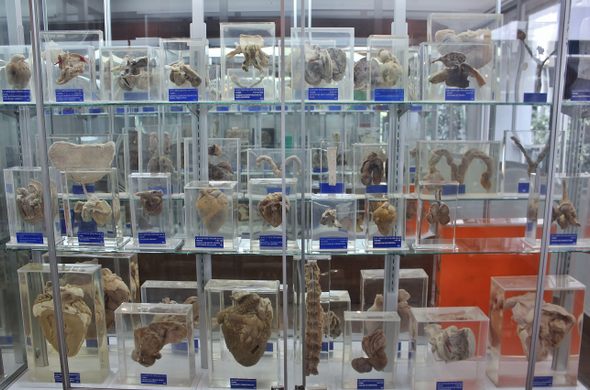
What sets the Mexican Pathology Museum apart from conventional medical museums is its unparalleled collection of pathological specimens. Visitors are greeted by a chilling display of over 3,000 exhibits, including preserved organs, skeletal deformities, and wax models that illustrate various diseases and medical conditions. The collection is divided into several sections, each with its own unique focus:
1. Anatomy Hall: This section showcases a vast array of human organs, both healthy and diseased, preserved in jars filled with formaldehyde. The sight of these meticulously preserved specimens can be both awe-inspiring and unsettling.
2. Embryology Hall: Here, visitors can explore the development of human embryos through a series of intricate wax models. This section provides insights into the early stages of life and the anomalies that can occur during embryonic development.
3. Neurology Hall: For those with a fascination for the human brain, this section features a captivating collection of brains, spinal cords, and nervous system anomalies. The intricate network of nerves and the brain's complexity are on full display.
4. Teratology Hall: This section delves into the world of birth defects and abnormalities. Wax models and preserved specimens depict a range of congenital conditions, shedding light on the mysteries of genetic anomalies.
5. Pharmacology Hall: A unique addition to the museum, this hall showcases an assortment of vintage medical instruments and apothecary equipment, offering a glimpse into the history of medical treatment.
The Experience
Visiting the Mexican Pathology Museum is a surreal experience that challenges one's perceptions of beauty, morbidity, and the human condition. The exhibits, though haunting, serve as a testament to the resilience of the human spirit and the relentless pursuit of medical knowledge.
The museum is not for the faint of heart, as it confronts visitors with the harsh realities of disease and mortality. However, it also serves as a place of education, fostering a deeper understanding of the human body and the fragility of life.
Conclusion
The Mexican Pathology Museum stands as a testament to the intricacies of the human body and the evolution of medical science. It offers a rare and haunting journey through the annals of medical history, shedding light on the mysteries of disease, anatomy, and the human condition.
For those with a curious spirit and an appreciation for the bizarre, this museum is a must-visit destination in Mexico City. It challenges visitors to confront their fears and embrace the enigmatic world of pathology, leaving them with a profound sense of awe and reverence for the complexity of the human body.
All photos and videos are their own. Taken from several sources on the internet. They have their own copyright.